If you want to get more likes on Facebook posts, focus on three things first: a first line that stops the scroll, posting when your followers are actually online, and short vertical video or real photos instead of stock images. A reaction is the lightest form of engagement – one tap – so small improvements in the right places show up quickly in your numbers.
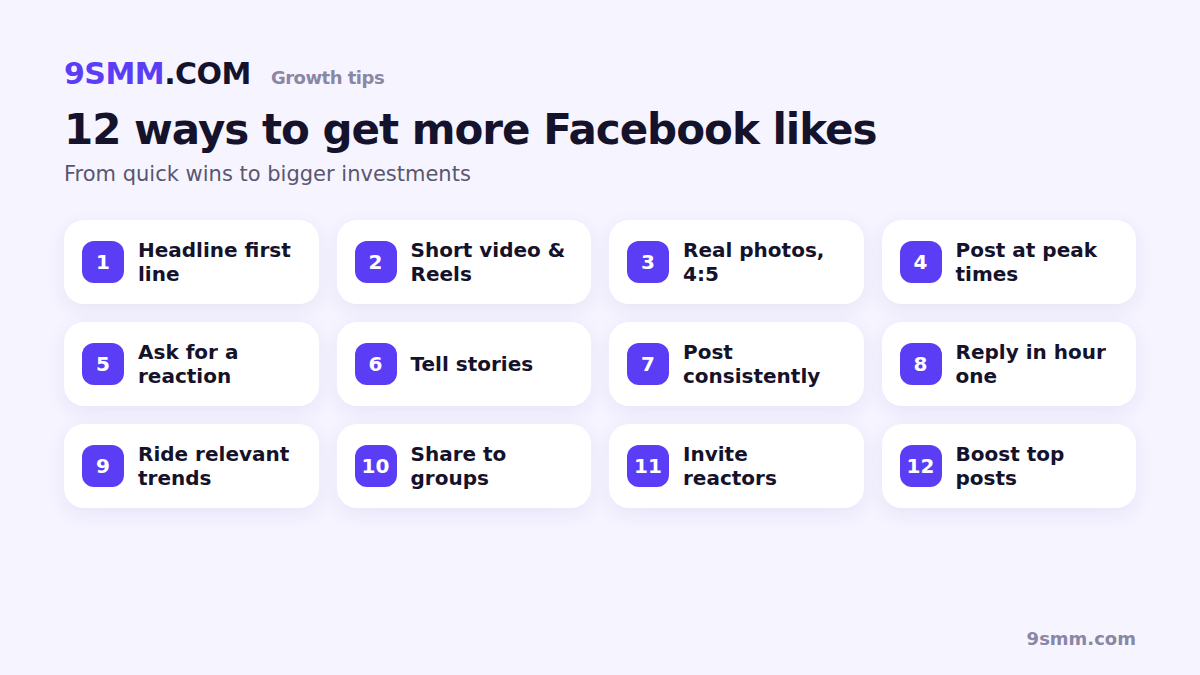
Below are 12 tactics many Pages use, ordered from quickest to more involved, plus how to measure what works and when a paid boost makes sense.
Why post likes still matter
Comments and shares carry more weight in Facebook's ranking, but likes and reactions are the entry point. Someone who reacts to one post tends to see more of your next ones. Reaction counts are also the first thing a new visitor sees when deciding whether a Page is worth trusting.
In short, getting more likes on Facebook helps you reach more people organically, build trust, and create momentum for comments and shares.
1. Write your first line like a headline
Facebook shows only two or three lines before "See more". Your opening has to stop the scroll: a number, a question or a clear promise. For example: "3 mistakes that get online orders cancelled – everyone makes #2."
2. Lead with short video and Reels
Vertical videos of 15–60 seconds are pushed hard, including to people who don't follow you. Put the most interesting moment in the first three seconds and add captions – most people watch with the sound off.
3. Use real photos, not stock
Photos you shoot yourself – real products, your team, behind the scenes – collect more reactions than stock images because they feel personal. A 4:5 vertical crop takes up more of the screen than landscape.
4. Post at your peak times
Open Meta Business Suite → Insights → Audience to see when your followers are most active. Post 15–30 minutes before the peak so the post is already warming up when most people arrive.
5. Ask for a specific reaction
"Tap ❤️ if this has happened to you" or "❤️ = yes, 😆 = no" turns a reaction into an answer. Use it sparingly – Facebook demotes obvious engagement bait like "like if…, share if…".
6. Tell stories, don't just advertise
Posts with only a price and "DM us" rarely get likes. Share a customer story, why you built the product, a mistake you made. Emotion earns reactions; announcements don't.
7. Post consistently, not in bursts
Three to five posts a week beats ten in one day followed by silence. Followers get used to your rhythm, and Facebook sees an active Page.
8. Reply to comments in the first hour
Every reply adds engagement and brings the commenter back to the post – often with a like. More tactics in how to get more comments on Facebook.
9. Ride relevant trends
Events, holidays and hot topics in your niche get shared and reacted to more. Only jump on trends that fit your brand, or it backfires.
10. Share to groups and Stories
Share Page posts into relevant groups (where allowed) and to admins' personal Stories. It's the fastest way to reach people who don't follow the Page yet.
11. Invite people who reacted to like your Page
On a Page post, open the list of people who reacted – Facebook lets you invite them to like the Page. They already enjoyed your content, so acceptance rates are high.
12. Boost your best organic posts
When a post is already doing well organically, put a small budget behind it with an Engagement objective. Boosting proven content is far cheaper than promoting an untested post.
Mistakes that quietly kill post likes
- Links in the post body. Posts that send people off Facebook often get less reach. Put the link in the first comment or test both ways.
- Walls of text. Break long captions into short lines with white space so they're easy to skim.
- Low-quality visuals. Blurry, cropped or heavily watermarked images get scrolled past.
- Ignoring your audience. If followers never react to a type of post, stop posting it – however much you like it.
- Going silent. Long gaps reset momentum; a steady schedule matters more than volume.
Measure what works
Each week, log every post in a simple sheet: format, time posted, reach, reactions, comments, shares. After three or four weeks you'll clearly see which formats and time slots bring the most likes.
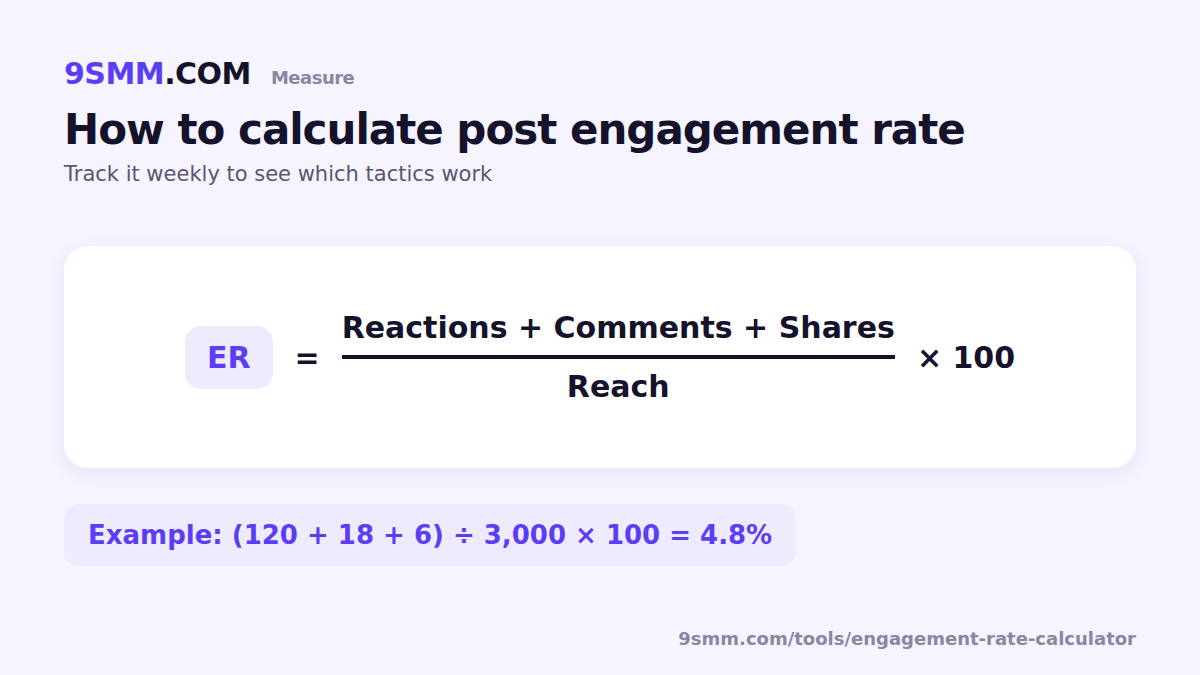
The number to watch is engagement rate = (reactions + comments + shares) ÷ reach × 100. Work it out quickly with the free engagement rate calculator.
When does buying likes make sense?
For a new Page or an important post – a pinned post, an ad, a giveaway – an initial batch of reactions keeps it from looking empty. Many stores use a small, spread-out amount and let the organic tactics above do the rest.
If you're considering it:
- Keep quantities in line with your Page size (e.g. 50–200 for a small Page).
- Likes can drop; the current service has no refill.
- Facebook prohibits inauthentic engagement – avoid big sudden spikes.
Current prices start at $0.09 per 1,000 on the Facebook reactions service. The full walkthrough is in Buy Facebook Likes: prices, how it works & what to check.
FAQ
Why do my Facebook posts get so few likes even with lots of followers? Usually because organic reach is low: content that doesn't hold attention, posting at the wrong time, or a Page that went quiet for a while. Try short video and a steady schedule for two to three weeks, then compare.
Is getting likes on a personal profile different from a Page? The principles are the same, but personal posts mostly reach friends. Set posts to Public and turn on Followers if you want them to travel further.
Is a "Love" worth more than a "Like"? Meta has said that stronger emotional reactions are treated as a stronger signal of interest than a plain Like, but every reaction helps.
How long until I see results? Timing and first-line tweaks can pay off on your very next post. Sustainable growth usually takes four to eight weeks of consistent posting.
Should I delete posts with few likes? No need. Deleting posts doesn't improve your Page – learn from them and try a different format.