A social media marketing strategy is a short, written plan that says what you want from social media, who you are talking to, which channels you use, what you post, how much you spend and how you measure results. Without one, most small businesses post randomly, get little engagement and give up after a few months.
This guide walks through a practical 7-step social media marketing strategy you can finish in an afternoon and review once a month. If you need the basics first, read what social media marketing (SMM) is.
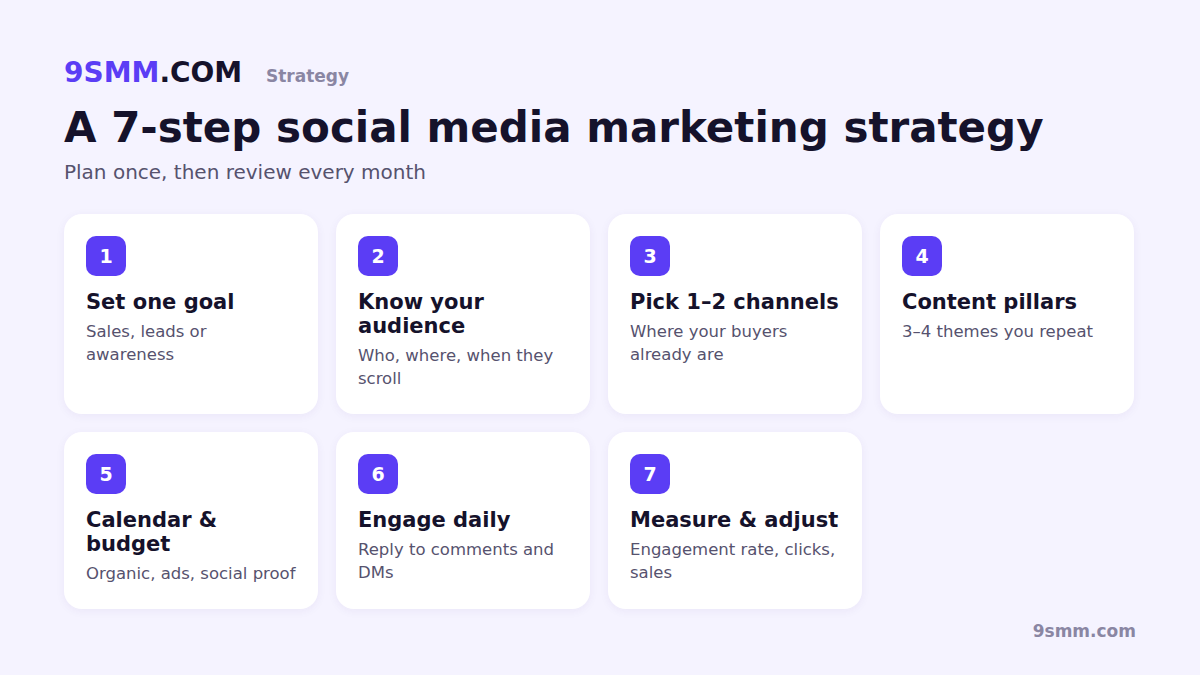
Step 1: Set one clear goal
Pick one main goal for the next 90 days. Trying to do everything at once is the most common reason a social media marketing strategy fails.
- Sales: people buy from your posts, shop or Messenger.
- Leads: people message you, fill a form or book a call.
- Awareness: more people in your market know your brand.
Make it measurable: "Get 60 Messenger enquiries per month from Facebook" is a goal; "grow on social" is not.
Step 2: Know your audience
Write down who buys from you today: age, location, job, what problem you solve and when they scroll. Look at your existing followers and customers, read comments on competitors' posts, and check your page insights for the hours your audience is online. The better you know them, the easier every later step becomes.
Step 3: Choose one or two channels
You don't need to be everywhere. Choose the platforms where your buyers already spend time and where your content format fits:
- Facebook: local businesses, groups, Messenger sales, older audiences.
- Instagram: visual products, Reels, creators and lifestyle brands.
- TikTok: short video, trends, younger audiences.
- YouTube: tutorials, reviews and long-form trust building.
Do one channel well before adding a second.
Step 4: Build 3–4 content pillars
Content pillars are the recurring themes you post about. They stop you staring at a blank screen every morning. A small skincare shop might use:
- Education – how to choose products for your skin type.
- Proof – customer reviews, before/after, unboxings.
- Behind the scenes – packing orders, new stock, the team.
- Offers – launches, bundles and limited promotions.
Keep offers to roughly one post in five. Feeds that only sell get ignored.
Step 5: Plan a calendar and a budget
A simple weekly calendar – for example three feed posts, two short videos and daily stories – is enough to start. Batch-create content once a week so posting never depends on your mood.
Then split your budget between three tools, because each does a different job:
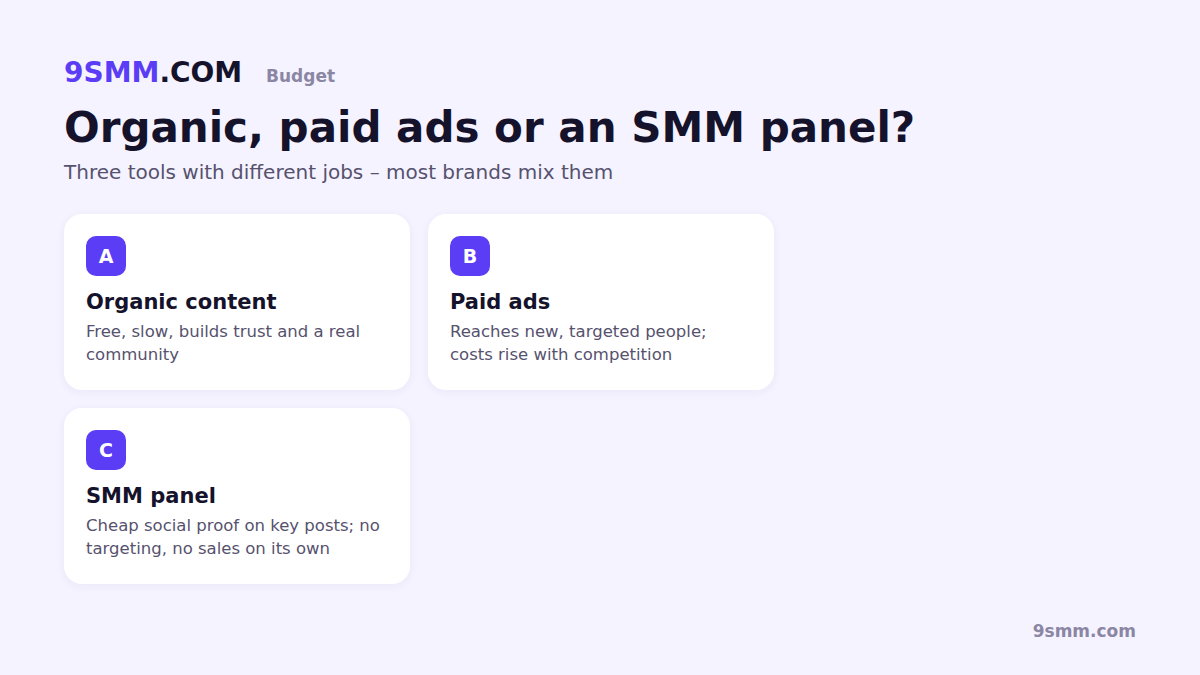
- Organic content is free but slow. It builds trust and a real community.
- Paid ads put your posts in front of new, targeted people. Costs rise as competition grows. See SMM panel vs paid ads for a direct comparison.
- SMM panel services add social proof – likes, comments or followers – so important posts don't look empty. They are cheap, but they don't target anyone and don't create sales on their own. Use them in small, natural amounts, and read whether SMM panels are safe before you start.
Step 6: Engage every day
Social media is a conversation. Reply to comments within a few hours, answer DMs the same day, and ask questions in your captions. Engagement signals tell platforms your content is worth showing to more people. Our guide on how to get more comments on Facebook has ten tactics you can use this week.
Step 7: Measure and adjust monthly
Track a few numbers that connect to your goal instead of every metric available:
- Engagement rate – interactions divided by followers or reach. Calculate it with the free engagement rate calculator.
- Reach and profile visits – are new people finding you?
- Clicks, messages and sales – is attention turning into business?
Once a month, look at your top five and bottom five posts. Do more of what worked, drop what didn't, and update your plan.
Common social media marketing strategy mistakes
- Chasing follower counts. A smaller audience that buys beats a large one that scrolls past. Judge success by your goal, not vanity numbers.
- Copying big brands. Their budgets, teams and goals are different. Borrow formats, not strategies.
- Posting without a hook. The first line or first two seconds of a video decide whether anyone stops. Write the hook before the rest.
- Changing everything every week. Give each idea at least four weeks before judging it; algorithms and audiences need time.
- Ignoring comments and DMs. Unanswered questions are lost sales and a signal to platforms that nobody is home.
- Relying on one tactic. Ads, social proof or viral trends alone rarely last. A balanced plan keeps working when one channel slows down.
A simple template for your social media marketing strategy
Copy this into a doc and fill it in:
- Goal (90 days): …
- Audience: who, where, when they scroll, main problem.
- Channels: main channel + optional second channel.
- Content pillars: 3–4 themes with one example post each.
- Weekly calendar: number of posts, videos and stories.
- Budget: organic time, ad spend, social proof spend.
- KPIs: engagement rate, reach, messages, sales.
- Review date: first Monday of each month.
FAQ
How long does a social media marketing strategy take to work? Expect early signals (engagement, reach) in 4–6 weeks and more reliable results in about three months of consistent posting.
How often should a small business post? Consistency beats volume. Three to five good posts a week on one channel usually outperforms daily low-effort posts across four channels.
Should I buy likes or followers as part of my strategy? Only as a small supporting tactic for social proof, never as the strategy itself. Real content and engagement still decide whether people buy.
What's the difference between SMM and social media advertising? Social media marketing covers everything – content, community, ads and analytics. Advertising is the paid part of it.